The TP-Link BE10000 review question is whether a tri-band Wi-Fi 7 mesh system with multi-gig ports and a 10G connection makes sense for your home.
The Deco BE63 two-pack is aimed at larger spaces and busy networks where flexible backhaul and room to grow matter.
Deco BE63 Review Summary
The quick verdict
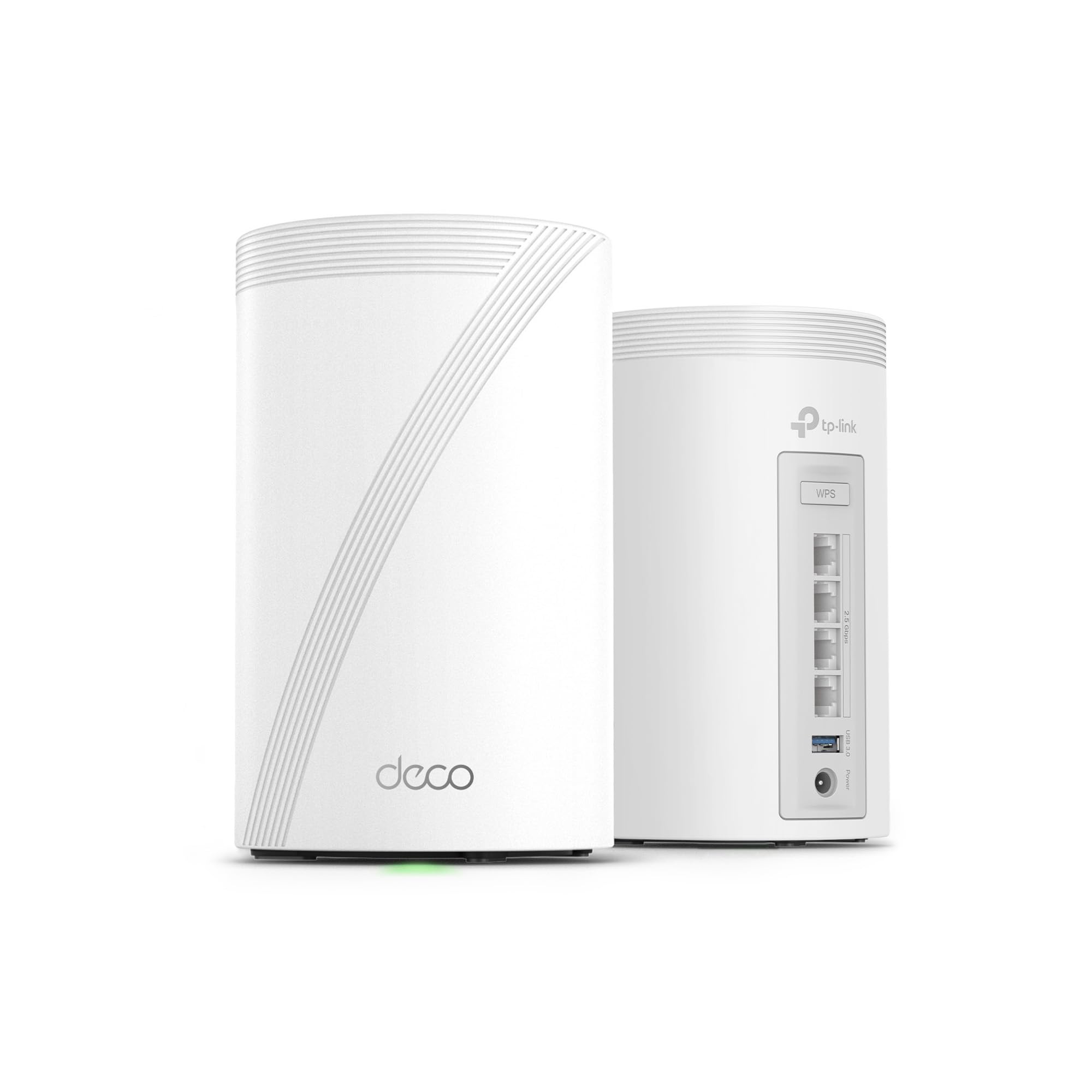
600+ ratings
Read Amazon ReviewsTP-Link Deco BE63
A feature-rich mesh system for larger homes, multi-gig wired networks, and households with many connected devices.
- Two-unit tri-band Wi-Fi 7 mesh system in the BE10000 class, with advertised maximum band speeds of 5,188 Mbps on 6 GHz, 4,324 Mbps on 5 GHz, and 574 Mbps on 2.4 GHz.
- Coverage listed at up to 5,800 square feet for the two-pack and support for more than 200 connected devices.
- Four 2.5G WAN/LAN ports, a 10G WAN/LAN port, and a USB 3.0 port.
- Simultaneous wired and wireless backhaul options; backhaul requires at least two Deco units.

Pros
- Tri-band Wi-Fi 7 offers a 6 GHz band alongside 5 GHz and 2.4 GHz for compatible devices and network traffic.
- The mix of four 2.5G ports and a 10G port supports varied multi-gig wired setups.
Consider before buying
- The advertised maximum wireless rates are theoretical band figures, not a promise of a device's internet speed; placement, walls, client capability, and service plan all matter.
- The more advanced radio capacity and multi-gig ports may be poor value if your internet service and wired devices do not need them.
Read the full review summary
The Deco BE63 combines three Wi-Fi bands, two mesh units, and multiple high-speed wired connections in a system designed to serve a broad area.
Its listed maximum coverage is up to 5,800 square feet, and the system is described as supporting more than 200 devices; actual results depend on layout, distance, and obstacles.
It is a strong fit for a household planning around Wi-Fi 7, with compatible devices, multi-gig internet or wired equipment, or an interest in connecting mesh units over Ethernet.
If your current internet plan and devices are more modest, much of its capacity may go unused, so a simpler mesh system may be a better match.
The buying factors
Deco BE63 Scorecard
Editorial scores reflect listed features and buyer fit; they are not laboratory measurements or customer ratings.
Wireless feature set
Tri-band Wi-Fi 7 includes 6 GHz, 5 GHz, and 2.4 GHz bands, with the top band figures adding up to the BE10000 class.
Coverage ambition
The two-pack is designed for broad coverage, with a stated maximum of up to 5,800 square feet; building conditions affect real coverage.
Wired connectivity
Four 2.5G WAN/LAN ports and a 10G WAN/LAN port give the system useful flexibility for multi-gig connections and wired devices.
Mesh backhaul flexibility
The system can balance traffic using tri-band Wi-Fi and Ethernet backhaul; wired backhaul requires at least two Deco units.
Network management
The Deco app handles setup and firmware updates, while a single network name and AI roaming are designed to simplify movement through the home.
Security and family tools
HomeShield and VPN client and server support are useful additions, though buyers should check which specific controls meet their needs.
Key Features and Specifications of Deco BE63
- Two-unit tri-band Wi-Fi 7 mesh system in the BE10000 class, with advertised maximum band speeds of 5,188 Mbps on 6 GHz, 4,324 Mbps on 5 GHz, and 574 Mbps on 2.4 GHz.
- Coverage listed at up to 5,800 square feet for the two-pack and support for more than 200 connected devices.
- Four 2.5G WAN/LAN ports, a 10G WAN/LAN port, and a USB 3.0 port.
- Simultaneous wired and wireless backhaul options; backhaul requires at least two Deco units.
- One network name and AI-driven roaming designed to adapt as devices move between mesh units.
- HomeShield network protection and parental controls, plus VPN client and server support.
- Setup and firmware management through the Deco app; a separate modem is required for most internet service providers.
Pros and Cons of Deco BE63
Pros
- Tri-band Wi-Fi 7 offers a 6 GHz band alongside 5 GHz and 2.4 GHz for compatible devices and network traffic.
- The mix of four 2.5G ports and a 10G port supports varied multi-gig wired setups.
- Two units and broad stated coverage make it a candidate for larger homes where one router may leave weak areas.
- Wired and wireless backhaul options give buyers more flexibility in how they connect the mesh nodes.
- VPN support, HomeShield, and app-based management add useful network features beyond basic Wi-Fi.
Consider before buying
- The advertised maximum wireless rates are theoretical band figures, not a promise of a device's internet speed; placement, walls, client capability, and service plan all matter.
- The more advanced radio capacity and multi-gig ports may be poor value if your internet service and wired devices do not need them.
- A separate modem is needed for most providers, so account for that equipment when planning the setup.
Who Should Buy Deco BE63?
Good fit
Consider the Deco BE63 if you are replacing an older mesh network in a large home and want a system with high-capacity Wi-Fi 7 radios and room for multi-gig wired connections.
The two-unit package is particularly relevant when coverage is the priority and you can place the nodes to reach the areas that need service.
It also suits households with newer Wi-Fi 7 devices, a multi-gig modem or internet plan, and wired equipment that can use the 2.5G ports.
If you can connect the units with Ethernet, the system supports wired backhaul; otherwise, it can use wireless mesh connections.
Before buying, map where the units can sit, check your modem and internet plan, and identify whether your clients support Wi-Fi 7 or 6 GHz.
That helps determine whether the system's extra capacity fits a real need rather than remaining unused.
Who should skip it
Skip this model if you only need basic Wi-Fi for a small space or your devices and internet plan do not benefit from Wi-Fi 7 or multi-gig networking. A simpler system may be easier to justify.
Look elsewhere if you need a mesh package that includes a modem. The Deco BE63 requires separate modem equipment for most internet providers.
What the Deco BE63 Means for Your Home Network
Tri-band Wi-Fi 7 and the BE10000 label
The BE10000 designation reflects the combined maximum figures across the three radio bands, rather than a single speed available to one device.
The 6 GHz band is the fastest on paper, while 5 GHz and 2.4 GHz provide additional capacity for compatible clients and everyday connections.
To benefit from Wi-Fi 7 features, client devices need to support them; older Wi-Fi generations remain compatible.
Coverage and node placement
A two-node system can help carry a network beyond the room where the modem sits, and the stated coverage ceiling makes this package relevant to larger homes.
That figure is best treated as a planning guide: floor layout, construction materials, interference, and node placement can change how far a useful connection reaches.
Place each unit where it can maintain a good connection while also serving the rooms that need coverage.
Ports and backhaul choices
The port selection is a notable part of the BE63's appeal.
Four 2.5G WAN/LAN ports plus a 10G WAN/LAN port provide options for a multi-gig modem, wired computers, storage, or other compatible network equipment, depending on how you configure the system.
Ethernet backhaul can connect the Deco units directly, while wireless backhaul avoids running cable; wired backhaul requires at least two units.
App controls, VPN, and HomeShield
The Deco app is the control point for setup and firmware updates, and the single-network-name design is intended to make movement between nodes straightforward.
HomeShield adds network protection and parental controls, while VPN client and server support can route selected home devices through remote VPN services without installing VPN software on each one.
Check the available app controls and service details against your specific security and family requirements.
Alternatives to Deco BE63
Whole Home & Mesh Wi-Fi Systems alternative
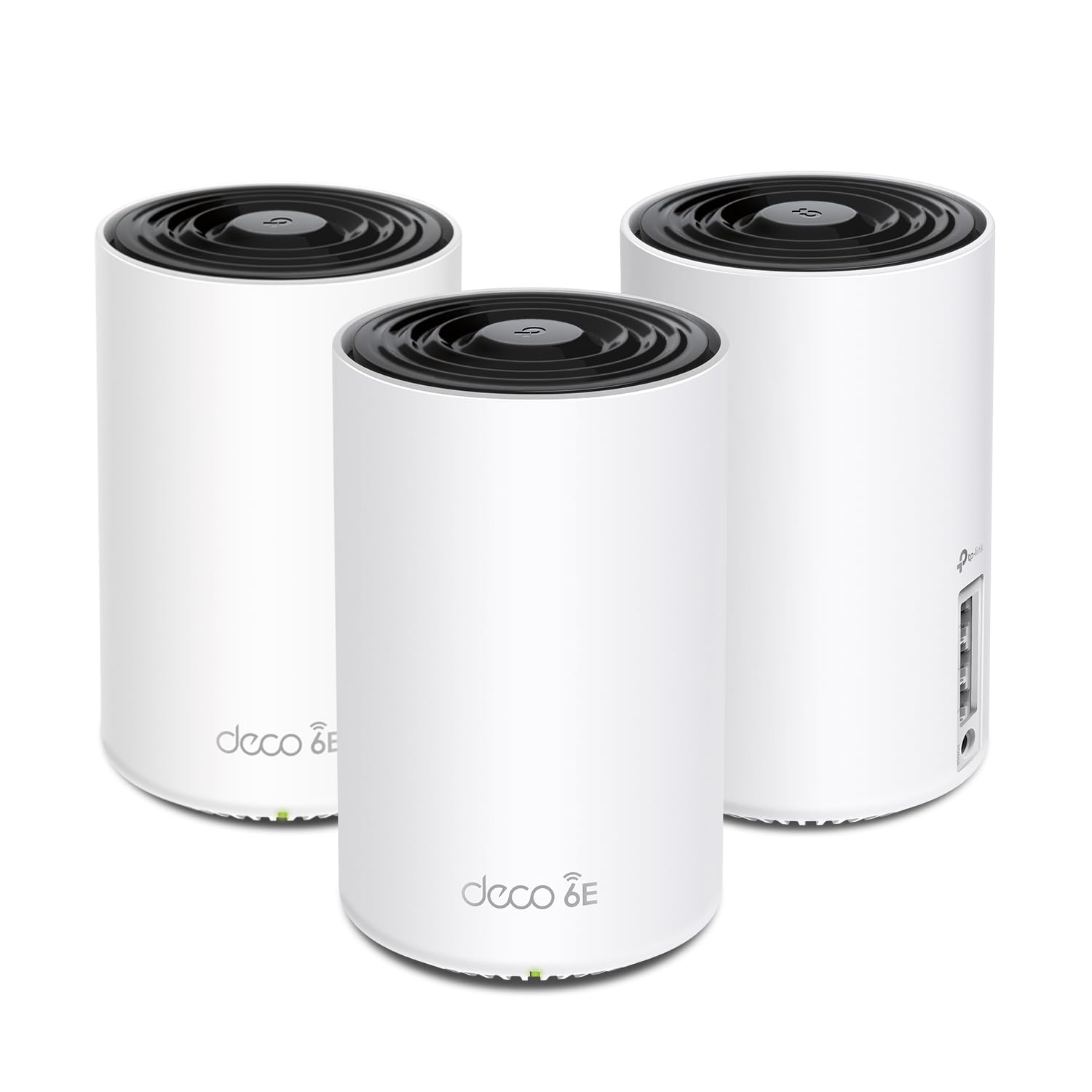
2,000+ ratings
Read Amazon ReviewsTP-Link Deco XE75
Choose the BE63 if Wi-Fi 7 and its higher-speed wired ports are central to your setup.
The XE75 may suit buyers who want a three-node Wi-Fi 6E package and value its stated coverage area over the BE63's newer generation and port selection.
- The Deco XE75 is a Wi-Fi 6E tri-band three-pack with up to 7,200 square feet of stated coverage and combined speeds up to 5,400 Mbps.
- Its 6 GHz band can serve as backhaul by default or be switched to client use.
- The Deco BE63 is a Wi-Fi 7 tri-band system with a 10G WAN/LAN port and four 2.5G ports, making it the more capable fit for multi-gig wired connections.
Whole Home & Mesh Wi-Fi Systems alternative
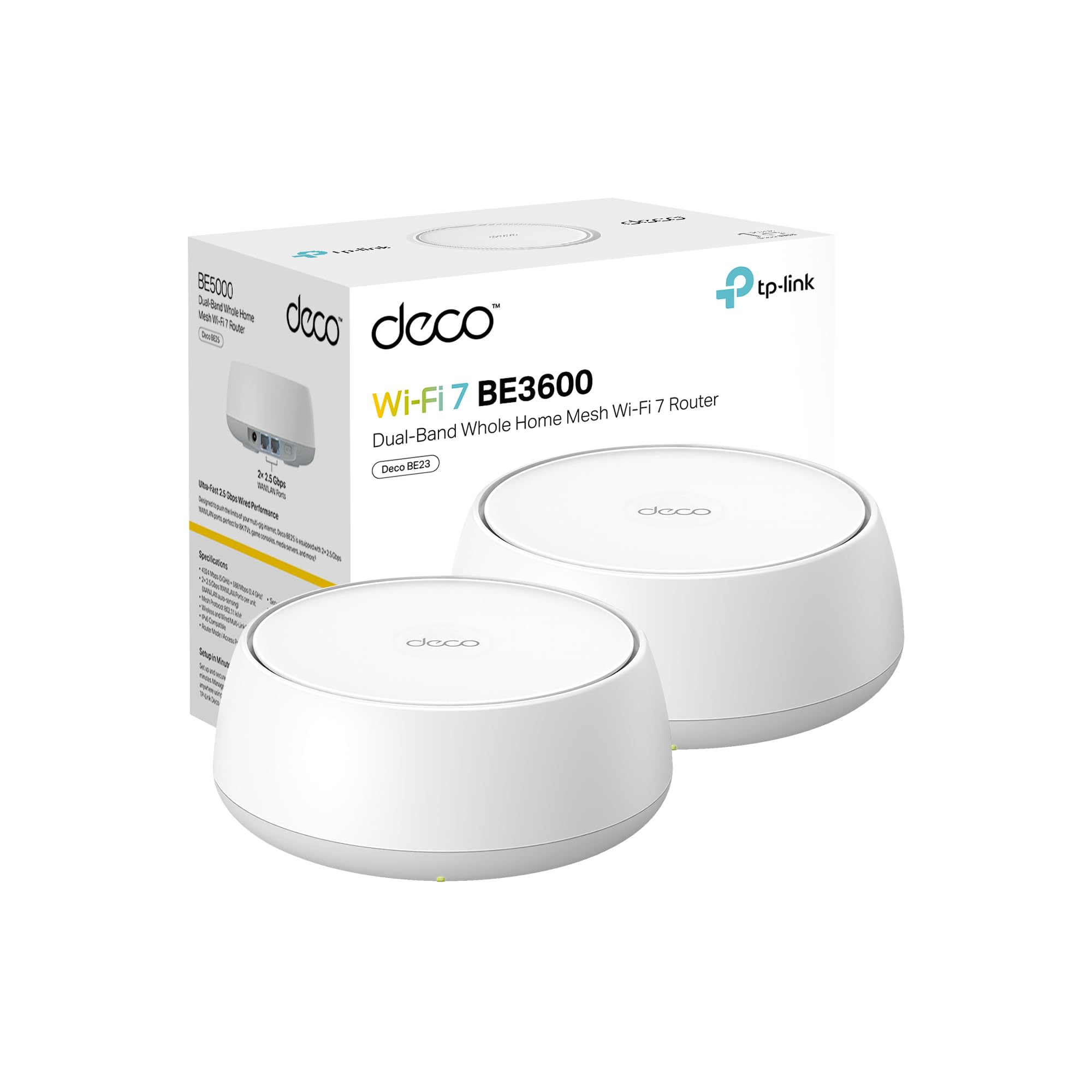
800+ ratings
Read Amazon ReviewsTP-Link Deco BE23
The BE23 is a closer match if you want Wi-Fi 7 and multi-gig ports but do not need the BE63's tri-band design or 10G connection.
Consider the BE63 if those added capabilities and its higher stated coverage ceiling fit your home and equipment.
- The Deco BE23 is a two-pack dual-band Wi-Fi 7 system with up to 4,500 square feet of stated coverage, two 2.5G ports per unit, and support for simultaneous wired and wireless backhaul.
- The Deco BE63 offers tri-band Wi-Fi 7 and a 10G port alongside four 2.5G ports, with a stated two-pack coverage of up to 5,800 square feet.
Is Deco BE63 Worth It?
The TP-Link Deco BE63 is worth considering for a larger home or a growing network that can use tri-band Wi-Fi 7, flexible mesh backhaul, and multi-gig wired connections.
Its two-unit design, broad coverage target, and port selection make it more than a basic router replacement.
Buy it when those capabilities match your devices, internet service, and layout. If your setup is modest, the extra capacity may not be worthwhile; check modem requirements, node placement, and client compatibility before choosing.
Your review at a glance
600+ ratings
Read Amazon ReviewsTP-Link Deco BE63
A feature-rich mesh system for larger homes, multi-gig wired networks, and households with many connected devices.
- Two-unit tri-band Wi-Fi 7 mesh system in the BE10000 class, with advertised maximum band speeds of 5,188 Mbps on 6 GHz, 4,324 Mbps on 5 GHz, and 574 Mbps on 2.4 GHz.
- Coverage listed at up to 5,800 square feet for the two-pack and support for more than 200 connected devices.
- Four 2.5G WAN/LAN ports, a 10G WAN/LAN port, and a USB 3.0 port.
- Simultaneous wired and wireless backhaul options; backhaul requires at least two Deco units.